2 LLCs and an SFDU: A Merge/Purge Fail

Screen Shot 2017-10-17 at 7.50.04 AM

AmEx B2B Solicitations

A couple of days ago, I was reminiscing about a great piece of direct mail I received last year.

Yesterday, I received the opposite.

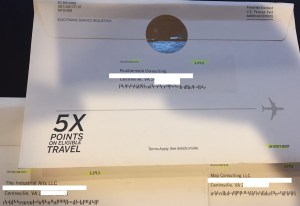
This falls under the category of a merge/purge fail. As you can see here, there are three companies at my address as follows:


  • Rubberneck Consulting — A non-company that I convinced AmEx to issue a card to in 1999 and cancelled later that year.
  • MAP Consulting LLC — My real consulting company, which AmEx has been trying to sell a card to since 2006.
  • The Industrial Arts LLC — Another LLC I just started a couple of months ago.

From the codes on the pieces, each of the three entities got the same mailing.

On the positive side, the address was correct. But why AmEx would send three solicitations to one SFDU (single family dwelling unit)? The “LLC” designation of two of those entities and the fact that only one of them has a DUNS number should immediately ID the address as a very small home-based business or single proprietor.

One other thing they should have noticed. I used to have an AmEx Platinum card. When the service became laughably poor and I balked at paying $450 per year for the privilege of carrying a card that few accepted, they told me “don’t let the door hit you in the ass” and cancelled me immediately with no save offer of any kind.

What I think AmEx should have done:

  • Check suppression logic to make sure mailing a B2B acquisition piece to the address of a known cardholder-initiated cancel is your intent.
  • Check for SFDU and MFDU (multi-family dwelling units) in the business addresses. De-deplicate multiple business entities or at least key some up to mail as a test.
  • Check a histogram of pieces/address and eyeball records with 3/4/5/n pieces sent to the same address. It could be logical, but I bet not.

It’s possible that AmEx has test results that prove it makes sense to hit a single address with three overweight B2B solicitations on the same day.

I suspect the easier explanation might be correct. They messed up the merge/purge logic and nobody was paying attention to the output.

Takeaway: If you’re going to do direct mail–and I think you should at least test it–make sure you have somebody that knows how to run a merge. Run the basic reports your service bureau offers. Eyeball the output. And win.

Posted in Data, Direct Response, Marketing | Tagged , , , , , | Comments Off on 2 LLCs and an SFDU: A Merge/Purge Fail

“Guessing is a Dumb Man’s Job”

Screen Shot 2017-10-13 at 3.43.35 PMI was watching a Richard Feynman lecture from 1964, during which he described the scientific process. As usual, he did it in a way that even I could understand.


Tell me if, in the next roughly 32 seconds of this video, he doesn’t perfectly explain some of the lunacy we hear in the babble of AI, machine learning, neural networks, etc. from the adtech and martech ecosystem.

We don’t need to develop the theory. Just shove all the stuff into your “data lake” and the algorithms (sounds fancy!) will take care of everything.

It kind of sounds like science but, as Feynman points out in the lecture, it’s not.

Takeaway: If you’re not developing the theories, computing the consequences, and developing good experiments, you’re not practicing marketing science. Start doing so. And win.

Posted in Education, Philosophy | Tagged , , , , , | Comments Off on “Guessing is a Dumb Man’s Job”

Yes to “No”

Magpie

When Shiny Objects Come A-Callin’…

“The difference between successful people and really successful people is that really successful people say no to almost everything.”      Warren Buffett

Focus on your strategy. And win.

Posted in Leadership, Philosophy, Strategy | Tagged , , , | Comments Off on Yes to “No”

The ANA was running ads on the hate site Breitbart. The attributed it to “an unintentional result of a programmatic buy and it has been removed.”

This happened just days after Bob Liodice said

“We as leaders should not accept this byzantine, non-transparent, super complex digital media supply chain. No one can understand it. Yet we keep feeding the beast by pouring incredible sums of money into this unproductive, unmanageable abyss.”

Oops, I guess?

Posted on by markpilip | Comments Off on ANA Pwned by Programmatic

Re-Seal the Deal: Category Repurchase

Three years ago today, I wrote about a great piece of direct mail I received from a local driveway sealer company. The piece had everything needed to make a purchase decision: a great offer, strong call to action, and perfect timing.

The service was excellent and I’m happy to report that it’s only in the last few months that I noticed that my driveway’s starting to fade a little. But three years of a nice, black driveway for just $65? A bargain!

I’ve been wondering why Academy Sealers hasn’t hit me again this year with an offer to re-seal my driveway. From looking at our neighborhood, it seems to me that those who seal their driveways tend to do so every two to three years.

So I expected an offer last year, when I did not receive a postcard, or this year. I think it’s probably hard to guess up front if I purchase on a two or three year cycle. I’d advise a driveway sealer company to mail on year two, then year three and four if no purchase.

With the data (purchase/no-purchase) you can start segmenting the universe into something like this:

  • Non-buyers
  • One-time buyers, who maybe liked the deal
  • Two-year cycle buyers
  • Three-year cycle buyers
  • Four-year cycle buyers

Then you can start looking for patterns. I’d guess that the cycles vary by neighborhood, which can help fine-tune future promotions. Further, timing matters. August in Virginia is probably too early and December is too late, from a weather perspective. Also, you’ve got to get in front of the competition.

In addition, I’d look at my sales penetration by neighborhood. It might be better to door-hanger the neighborhood with hand-written prices (to make it look like somebody gave you a custom quote) and maybe add an offer of 10% off if X or more neighbors got the service. And…

You can see how this got me thinking about driveway sealing and all the interesting marketing you could do, just by thinking about category repurchase rates.

So, do you really know your category repurchase rate?

Takeaway: Know your category buyers. Segment them by–among other things–repurchase rate. Customize offers to the targeted segments. And win.

Posted in Direct Response, Marketing, Strategy, Tactics | Tagged , , , , | Comments Off on Re-Seal the Deal: Category Repurchase

The next time you hear an executive parroting the “data is the new oil” line, sit them down at your own CRM for a few hours. Eyeball a few of the records your own company’s people created and supposedly cleaned with whatever SaaS services you have connected.

Then ask yourself a question: If that data’s so screwed up, what about the stuff you’re acquiring from other 3rd parties and using to predict behaviors? Maybe some of that oil’s of the snake variety.

Posted on by markpilip | Comments Off on Rattlesnake Oil

Checklist Marketing: Digital Media List

Bob Liodice and Marc Pritchard took to the bully pulpit at the ANA’s Masters of Marketing conference yesterday, and kept up the pressure on the adtech shysters who steal our money. As Liodice said,  “CMOs operate in the most nontransparent marketing ecosystem in our industry’s history. The willingness to trade off transparency for digital and technological innovation is over.”

JPMorgan Chase CMO Kristin Lemkau called for marketers to take more control, when  she said, “Ad fraud is getting worse, and there are 5,000 ad tech, mar tech, whatever tech companies that all say they have the answers. You can no longer entrust it to an agency, a platform or a machine.”

They are all correct.

The Curse of the Shiny Object

As marketers, we have to take ownership for our media decisions and not delegate it to the shiniest, most AI-ish, most machine learning technology that claims to make everything easy and automatic. Marketers are susceptible to charlatans and quick-buck artists like no other profession, and the ad tech and mar tech vendors have made a killing because of that flaw.

Now buying media is actually hard to do–forget what the automatic, set-and-forget programmatic/AI/whatever huckster says in their white paper. But I have an idea of how to fix it, in the form of The Checklist Manifesto: How to Get Things Right, a book highly recommended by the great Denny Hatch.

Denny liked it so much he wrote this 83 point ultimate marketing checklist, which I suggest you laminate, give to every marketing staffer, and hang on your walls. Your results will immediately improve, so please send Mr. Hatch a note of thanks for creating the checklist.

A Checklist for Digital Media

When flying a plane, skipping something small early on can have disastrous consequences. It’s the same when selecting media for a digital campaign, especially when you have gremlins in the form of questionable technology, bad code, and bad data tearing at the wings of your campaign.

Here’s a short list created for your digital media plan, in the form of a “READ-DO” checklist, which means you read the item, then you do it.

  1. Does the seller of the media have authorization to sell it? Call the owner of the media to confirm.      Y/N
  2. Is any of the traffic on the site sourced from traffic brokers (i.e. it’s bot traffic)?  Y/N
  3. If #2 is “Y,” how much and can I exclude that traffic? (If >10%* and/or “No” don’t buy)
  4. Will you guarantee me a non-bot viewability rate of X%?      Y/N
  5. Will you submit to a fraud audit by my auditor?      Y/N
  6. Will you sell me your inventory directly?     Y/N

Complete the above for every line on your media plan.

My rationale for the questions, and whether each one is a show-stopper:

  1. Show-stopper. If you find some media on an exchange, see if the owner of the media allows that media to be sold via that exchange. Don’t take the exchange’s word for it. You’d be surprised how many sellers of inventory don’t have the rights to do so.
  2. Problem to address. Brokered traffic is bot traffic. See asterisk below for more.
  3. Show-stopper. You never want to pay a nickel for bot traffic because a) it doesn’t work; and b) the clicks and “views” it creates pollutes your analytics platforms.
  4. Problem to address. This means you’ll get below-the-fold placements which you’ll have to monitor and account for as you analyze the media performance.
  5. Show-stopper. If you can’t get full audit rights from the publisher, exchange, or whoever is selling it, don’t buy it. They’re hiding something.
  6. Problem to address. If the media is working, and they’re a publisher of any size, you should be able to purchase the media directly from the publisher. Cut out the ad tech tax and you both make more money.

Takeaway: Model pilots and surgeons in your marketing by using checklists. Make fewer mistakes. And win.

* You may wonder why I say to not buy the media if the sourced percentage is >10%, if they are honest and disclose it. The answer is “shenanigans.” If they’re sourcing traffic to create ad units, that means they can pull the wool over somebody else’s eyes to make money. And if they’re doing one thing shady, they’re dishonest and doing other things wrong. Best and safest to just stay away.

Posted in digital marketing, fraud, Media, Philosophy, Tactics | Tagged , , , , , , | Comments Off on Checklist Marketing: Digital Media List

Ads.txt: Cui bono?

Screen Shot 2017-10-05 at 8.02.52 AMAds.txt is not the answer to solving the widespread problem of fraud in the digital marketing ecosystem, but it’s a small step in the right direction.

I was glad to hear that MediaMath announced that it will begin rapidly rolling out the use ads.txt on their platform. This will help spur adoption.

But a good question is why only 12.8% of the top 10,000 websites have adopted ads.txt. Seems to me that removing fraud and waste is generally a good thing, right? But ask yourself the question in the headline. And the answer to that is “advertisers,” which is the reason for the slow rollout.

55% of every dollar spent on digital advertising is hacked off by adtech and martech hucksters. So if a billion dollars in fraud could be removed by reducing domain spoofing, roughly $550MM stops flowing to the various vendors of marketing cruft you currently waste your money on. That’s enough money to put a few adtech companies out of business.

Ads.txt is bad for business if you’re an adtech or martech vendor. It reduces the amount of wasted working media spent on nonsensical websites, which means there’s less dollars flowing by that you can dip into.

Wanna bet how many vendors are slithering into publishers and agencies with Powerpoint showing how ads.txt ruins publisher revenues and prevents agencies from reaching the client objectives?

Further, when the water level of fraud is lowered a little–say by a billion dollars–the giant rocks of BS that lie under the water in digital marketing become exposed. One easy example: how do you think your MTA results are going to change with fewer bot view-throughs and clicks on fake websites polluting the data feeding the algorithm? The circle becomes virtuous. More questions begin to be asked about the tools advertisers are spending money on, and more useless technology gets switched off.

More advertisers will see the P&G effect, where they turn off millions in digital spend and see no ill effects.

Takeaway: Ads.txt is a good thing, but not the entire answer. When a good thing is slow-rolled, ask “cui bono?” If you’re an advertiser, vote with your wallet. And win.

Posted in Data, digital marketing, fraud, Media | Tagged , , , , , , | Comments Off on Ads.txt: Cui bono?

Social Media: “Testing Ugly Early”

An old adage of direct response marketing is “test ugly early.” The reason is that ugly disturbs. And that breaks through and triggers response. The other benefit is that ugly is cheap and quick to produce.

Ugly, disturbing, and cheap. Sound like anything else we know? Anil Dash wrote this morning:

“But our media & social networks are explicitly designed to maximize your agitation, and that does no good for anyone. Don’t let them do it.”

Want to get things done? Want to lower your agitation?

Stay away from social media. It’s anything but.


Posted in Leadership, Media, Philosophy | Tagged , , | Comments Off on Social Media: “Testing Ugly Early”

Bots in the Walled Garden!

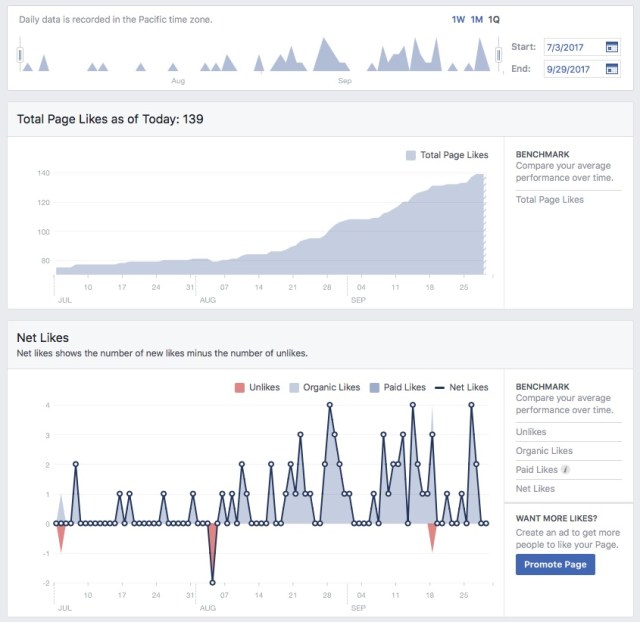
Screen Shot 2017-09-29 at 10.09.01 AMI’ve been getting a spike in “likes” every week for my Facebook business page over the last 4-6 months. They’re all clearly bot likes, as they appear to come from India, where I do no business nor have friends or family. Further, the page doesn’t have anything on it. It’s just a placeholder. But a bot wouldn’t know that.
My suspicion is that the bots are increasingly infiltrating Facebook. As Facebook has to grow revenue, they can do it in three basic ways:

  1. Increase number of users
  2. Increase number of ad inventory units
  3. Increase value of ad inventory units

They can’t really take the second approach, as there’s a limit to how many ads we’ll accept in between humblebrags and cat videos. They’ve been pushing video of all kinds, where the advertising CPMs are higher, so the third approach will work until the pages are filled with auto-playing videos.

Oops, that’s been killed in OS X, at least.

So go to option #1. I’m not saying that Facebook is creating the fake accounts. However, I suspect they’re doing the old “turn and cough” when it comes down to looking at the new accounts that are being created.

Think you can’t create bots that will get through social media registration systems? Think again.  Here’s a whole community of people who create them. And the best bot creators aren’t even there–they’re on the dark web, or exchanging information face-to-face somewhere in a cafe in St. Petersburg.

Takeaway: Check the accounts of those that like and follow you on social media. Ask the question: “could this be a bot?” Be skeptical. And win.

P.S. Here’s my like spike over the last few months on Facebook

Screen Shot 2017-09-29 at 9.54.35 AM

Posted in digital marketing, fraud, Social Media Marketing | Tagged , , , , , , , | Comments Off on Bots in the Walled Garden!