Does your company have an internal education system? You probably go there once a year or quarter for the compliance training, and not much else.
It probably has some nice introductory music, cute little branded cartoons, and has scored quizzes at the end to certify your progress. The LMS (learning management system) is also very corporate-friendly, breaking things down into neat 10 minute, 30 minute or one hour blocks.
Tidy, boring, and almost useless when it comes to true education.
Learning doesn’t fit into neat blocks of time, followed up by quick quizzes. We all learn differently. Some of us are best listening to lectures. Others do well in peer-led discussions. Others read voraciously. Or use varying methods, depending on what we’re trying to learn.
If we’re all life-long learners–and we should be–we must use our curiosity to help us seek out new knowledge. My advice isn’t to go to your corporate LMS to learn unless, of course, it works for you. Instead, go out to the world to find information that fits your learning style. And be sure to look for information that contradicts what you’re trying to figure out. As Richard Feynman said “you are the easiest person to fool.”
Seeking knowledge takes more time. But anything worth learning is worth the time to teach it to yourself.
Here’s a good example of some messy, real-world learning that works for my learning style, on the topic of blockchain for digital advertising.
You’ll never find a real Rolex on Canal Street in New York City for $30. But for some reason we delude ourselves into believing that the FT.com ad impressions that show up on some sketchy exchange for $2 CPM are real.
It turns out that FT did some checking and found that the equivalent of one month’s of legitimate display and video inventory was being offered every day on 10 and 15 different ad exchanges, respectively, from 300 different accounts.
FT only sells inventory via Google AdX and TrustX. So who was asleep at the switch at the over 11,000 agencies and brands that buy FT inventory? It seems nobody is asking the simple question we ask before buying a Rolex: Is this a legitimate dealer?
You’d ask the question when buying a $10,000 watch, but not hundreds of thousands of dollars of advertising inventory? That’s just lazy.
Advertisers: Ask your agencies where they’re buying the inventory and ask if the seller is authorized to sell the publisher’s inventory. In some cases you can check the ads.txt file. You can even ring up the publisher and–gasp!–talk to a real human being. (Try it, you’ll like it.) And understand the rate cards, for heaven’s sake.
Agencies: You know which exchanges are sketchy. Stop buying there. Then cut the number down to one or two. And understand the rate cards, for heaven’s sake.
Takeaway: If you think you’re getting a Rolex on Canal Street for $30 or premium publisher inventory for a couple of bucks/M on an exchange, I’ve got a deal on a bridge in Brooklyn for you. Be skeptical. Assume fraud. And win.
Why learn how to use an obsolete device like this, when GPS navigation is so much more reliable?
It turns out the signals from our GPS satellites are relatively weak by the time they hit the earth. If you can drown out the true–but weak–signal with the right kind of noise, your computer can be fooled into erroneously calculating your position.
If you’re reasonably clever and have about $1,000, you can do it too.
Let’s bring this back to marketing. How can you be sure that your marketing navigation system is picking up the true signal, which can be very weak in these days of bots, fake traffic, and across billions of rows of impression data?
The answer is to check your marketing whiffletree (you’ve built one, right?) and see if the answers make sense. If you get any strange or conflicting data, it’s time to figure out why the data doesn’t agree. Is it the signals are wrong? Or are they being interpreted incorrectly?
You can ground your marketing campaigns on a reef of woe if you don’t know where you are. Make sure your captain (CMO), executive officer (VP of marketing) or somebody knows how to do things the old-fashioned way. And make sure you check with them!
Takeaway: Don’t just trust what the computers and models say. Check the results with an offline tool or just old-fashioned logic. Then act. And win.
Dr. Augustine Fou just published an interesting presentation, “You’re Not Getting What You Paid For,” which I encourage all marketers to read. The presentation lays out a number of the ways you–yes you–are being screwed in the digital ecosystem. In short:
You’re not running where you think you are
Your fraud verification tools aren’t catching the problems
The ad networks you’re buying on are serving ads to bots
The system is so complicated you don’t know where to start.
But there’s a glimmer of hope and Dr. Fou gives you a clue to the solution.
In slides 15-18 he gives examples of marketers (JPMorgan Chase, Restoration Hardware, and Uber) cutting back on the number of sites they purchase on. In all cases, the performance didn’t suffer. I’ve seen the exact same results with my clients.
Thinking back to June, I read this article about P&G and Unilever and reduced it to the following graph:
Unless you work for a massive CPG company, you don’t
They don’t run on many sites, yet sell billions of dollars of stuff
They are running on fewer, not more, sites as time goes on
So how come P&G and Unilever can be successful running ads on <1,000 sites when you “have to” run on thousands?
The answer is they are looking ruthlessly at the data, calling BS on what they see, and you’re not. The bonus is that once you can get down to <1,000 sites, you can buy direct. No more going through sketchy ad networks selling ads to “audiences” of who-knows-what.
Yes, it’s manageable. Heck, it would even work in Excel. I’ve done the analysis on hundreds of thousands of sites by hand, by myself, in Excel. It didn’t even take that long.
So why aren’t you buying direct and only on a few sites?
Takeaway: Hard whitelist. Buy direct. Cut out the ad tech middlemen. Act like a performance marketer. And win.
Facebook stepped in it again, this time by allowing users of their advertising platform to target users via vile anti-Semitic terms. Do I think the people or the company is anti-Semitic? Of course not.
I think the company* is anti-human. We get in the way of making money. We refuse to be upsold predictably, consume on demand, and take predictable “customer journeys” that conveniently spew forth the most profit.
I think Facebook’s problem was the blind faith that algorithms can replace what people do. But the algorithms can’t be written to demonstrate empathy. You can’t score common sense. Sure, algorithms can maximize Facebook’s advertising revenue. A side effect–as we see–is that they can minimize humanity when humans aren’t empowered to deploy common sense.
There’s an article at The Atlantic that asks if Facebook could have caught the problem, and I expect you’ll see more articles along those lines. That line of thinking is ridiculous. Of course they could have caught the problem. But nobody was looking.
People instantly saw the abhorrent nature of that type of targeting and correctly shut it down. But I believe the people inside the company have been minimized as well. The techbro coder culture takes away people’s decision-making ability: The algorithm built by the expensive guy in the hoodie, living on Soylent, can’t possibly be wrong.
Silicon Valley algorithms are just the work of humans, riddled with their own biases, layered with the inevitable software bugs, and rushed out rapidly to maximize profit. To fix human problems, you need to empower humans and place them, not the algorithms, at the top of the heap.
Takeaway: Build the best tech you can. Make sure humans, with their ability to be empathetic, nuanced, and unpredictable are always allowed to use judgement. Build up humanity. And win.
* I lump Facebook, Google, Amazon and other Silicon Valley companies that practice the destruction of value and human lives through “disruption” together.
We get a kick out of images like this one at the left. How in the world could somebody let a system get so out of control?
When Alan Kay shows this picture, he points out that every wire was put there for a reason, to solve some particular problem. The excessive complication of the wires probably masks some moderate underlying level of complexity. As Kay points out, when we hit the “Yikes!” moment, we’ve got to figure out what caused the “Yikes!” moment. Was it complexity or complications?
Complications are noise that can turn a complex situation into “Yikes!”
The problem with our server room? If you start pulling wires, you’re screwed.
Now tell me how the ad tech ecosystem below is any different than our server room? I get the same answer when I ask about pulling ad tech and mar tech wires: “If you do it, you’re screwed.”
“Do Not Touch Any Of These Wires”
I think that a lot of the complications and noise have been added intentionally to create a “wire” of money that the advertiser or publisher dare not pull.
Takeaway: Avoid adding complication to address complexity. Avoid adding noise. And win.
My core beliefs include positivity and assuming goodwill. If you only knew me from my writing here, you might not think that. It’s hard to be positive sometimes when I seem to spend the whole day mired in “digital” marketing problems.
First, a few things about guitarists, the target market for the products in this video:
Most guitarists are on a constant tone chase, wanting to sound like their favorite player(s) or getting a unique sound of their own.
The music industry obliges that quest by producing tons of amplifiers, guitar pedals, and guitars that purport to help.
Most guitarists (myself included) refuse to believe the truth that “tone is in the fingers.”
Most guitarists would be better off spending 99% of their gear budget on lessons, and 98% of the time they spend watching YouTube videos on practice, myself included.
Guitar players have the peculiar habit of watching many hours of videos and reading guitar forum opinions before spending just $99-$200 on a guitar effect pedal. This last part is the most important. It’s the behavior that Anderton’s has zeroed in on.
What makes Anderton’s use of YouTube great is that the Captain acknowledges the above and, understanding the needs of his target audience and his need as a retailer to sell product, has created a brilliant YouTube channel. He has great presenters, funny banter, zero sales pitch pressure, great education, and an easy way to see and hear the gear you’re contemplating.
I don’t know anything about their business, other than I bet they shift a lot of goods, have great customer care ratings, and I’d be the first on line to patronize them if they ever opened a shop here in the U.S.
With the above in mind watch a few minutes of this video of the incredible Peter Honoré and Tore, the product manager for TC Electronic. You get everything from how easy the products are to use, to the clever “Mash” technology for the pedals, to a great idea of what you could do with these TC products.
The video addresses all the needs and desires of a guitarist with the addition of one thing most “content marketing” types don’t understand: this is darn good entertainment. These guys are engaging, funny, and truly knowledgeable experts in their field. Even if I don’t buy from Anderton’s this time, the saliency of their brand is embedded in my mind every time I watch a video on the channel.
So how did this video work for me? Midway through the demo of the TC Flashback 2 product, I was over at Amazon (sorry Lee!, but good for Tore) and picked one up. I still haven’t totally figured it out and, of course, I can’t play anywhere near like Pete. Check it out:
Good marketing? Yep.
Takeaway: Understand the behavior of your target audience. Develop strategies that align with that behavior. Deliver compelling messages in appropriate media. And win.
Have a great Labor Day weekend and a great fall.
P.S. Lee, if you ever read this, a question. Why did you bring Pete on board? He sucks me in with his great playing and then makes me want to go to the basement and chop my guitars into firewood!
Posted inUncategorized|Comments Off on Mix modelling muddles marketers
I’ve been a fairly successful continuity marketer, CMO, whatever. As such I’ve got a lot of what I think are good ideas about how to do marketing-type things.
It’s a small price to pay, said John Montgomery, global EVP of brand safety at GroupM, running somewhere between two and 10 cents per thousand impressions for brand safety protection when it’s bundled in with viewability and anti-fraud measures from the same provider.
Notice that title? Why in the world does an agency need a global EVP of brand safety?
Do the account people or media planners and buyers understand what’s on-brand and what’s off-brand? Do the clients understand or clearly articulate what types of media are appropriate for their organizations?
An EVP of brand safety, plus the staff in that organization can’t be cheap. And the clients are paying for it. Once upon a time, you could trust your agency, like a physician, to “first, do no harm.” Now, you’ve got to have an in-house babysitter to catch the harm after the fact.
If the existence of EVP-level “brand safety” people at agencies isn’t a good example of what’s wrong with digital advertising, I don’t know what is.
Takeaway: Chasing “audiences” at the cheapest CPMs, with no segmentation strategy, is the root cause of brand safety problems. Think like a marketer. If it’s too good to be true, it is. Be skeptical, always. And win.

 You’ll never find a real Rolex on Canal Street in New York City for $30. But for some reason we delude ourselves into believing that the FT.com ad impressions that show up on some sketchy exchange for $2 CPM are real.
 In 2015 the U.S. Naval Academy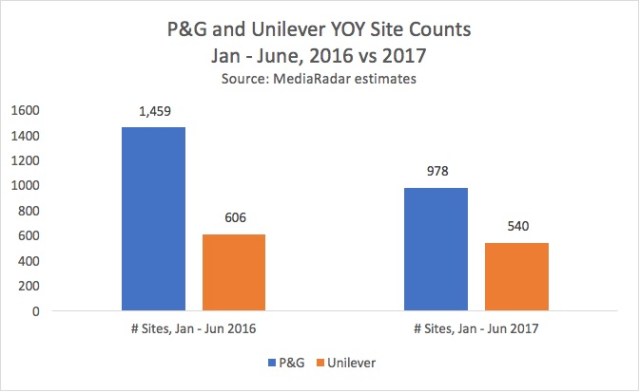



 PilipBlog
You must be logged in to post a comment.